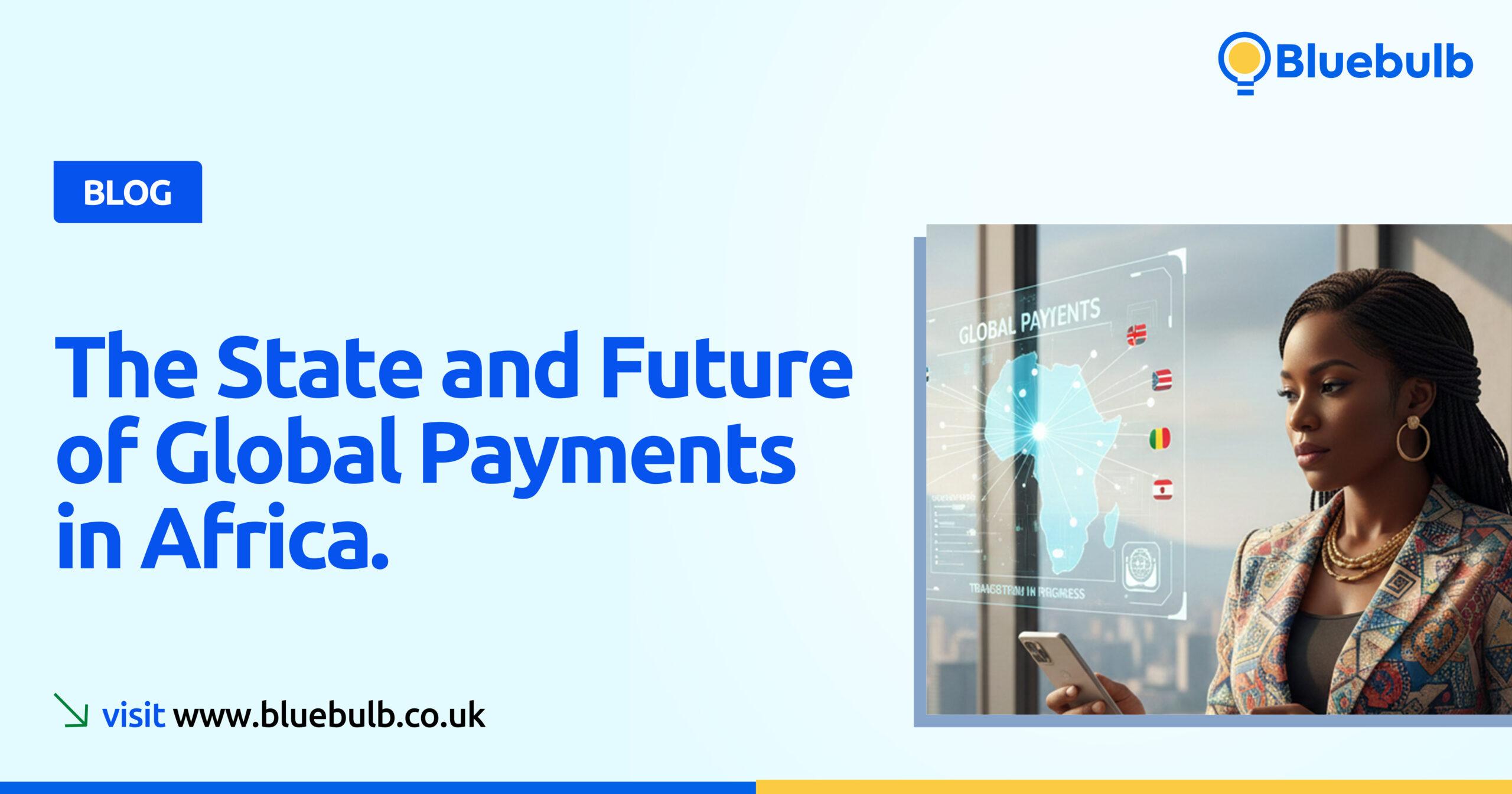
The State and Future of Global Payments in Africa
25th November 2025 9:19:28 AM
Africa’s payment revolution isn’t coming; it’s here.
In 2024, Africa was home to 1.1 billion of the world’s 2.1 billion registered mobile money accounts, representing 65% of the total $1.68 trillion transaction value. Yet cross-border payments remain painfully slow and expensive.
This disconnect between domestic payment excellence and cross-border inefficiency represents Africa’s biggest challenge and most significant opportunity.
Contact us today for instant global payments
Where Africa Leads and Where It Lags
Africa didn’t catch up in mobile payments, it lapped everyone else.
Kenya’s M-Pesa launched in 2007. Today, mobile money penetration in East Africa exceeds credit card adoption in many European countries. Since 2020, digital remittances usage doubled, with Africa now accounting for 71% of mobile remittance value globally.
The numbers:
- Africa had 2 Instant Payment Systems in 2017. By 2024: 14 networks processing over $1 trillion in 2023
- Digital payment economy projected to reach $1.5 trillion by 2030
- Formal remittance inflows are growing 10-15% annually
Cross-Border Struggle: The High-Cost Reality
While domestic payments excel, international transfers remain broken.
Sub-Saharan Africa is the world’s most expensive region for sending money 7.73% average cost in Q1 2024 versus 6.35% global average. A 2024 African Export-Import Bank survey found 68% of SMEs identified payment issues as their primary obstacle to international trade.
Why cross-border payments remain a challenge?:
Regulatory Fragmentation: Each African country has different FX, AML, and reporting rules. Solutions that work in Nigeria require a complete redesign for Kenya or Ghana.
Currency Liquidity Imbalances: Demand imbalances between currency pairs create friction. Who wants Ugandan shillings in Rwanda? Who wants Rwandan francs in Uganda?
Infrastructure Disconnection: Brilliant domestic payment rails don’t connect across borders, forcing businesses to go through multiple incompatible systems.
Banking System Limitations: Correspondent banking designed for the pre-digital era creates delays that no amount of innovation can bypass without alternative infrastructure.
Contact us today for instant global payments
Innovation Reshaping African Payments
Multiple technologies are converging to redesign how money moves across African borders.
Fintech Disintermediation
Companies like Flutterwave and Chipper Cash prove that alternative payment rails deliver better outcomes than traditional banking. Some fintech companies process 99.8% of payments within 24 hours, versus 3-7 days for traditional banks.
The fintech advantage:
- Direct banking partnerships eliminate correspondent intermediaries
- Technology-first infrastructure built for speed
- Customer experience prioritizing simplicity
- Data-driven optimization impossible with legacy systems
Blockchain and Stablecoins
Companies like Ripple leverage stablecoins to bypass conventional banking, providing faster, cheaper solutions.
Pan-African Infrastructure
The Pan-African Payment and Settlement System (PAPSS) enables instant, affordable cross-border payments in local currencies, potentially saving African businesses $5 billion annually.
As of June 2023, 32 active domestic and regional instant payment systems exist, with more developing. When interoperable, these will rival developed market networks.
Why Technology Alone Won’t Solve Everything
As Kwame Oppong, Director of Fintech and Innovation at Bank of Ghana, states: “Fintechs cannot solve the problem of cross-border payments in Africa because the solution is not tech-based. The technological solution already exists; however, the main problem has several layers.”
The Identity Challenge
Without widespread digital identity systems, KYC compliance remains expensive and unreliable. Technology can’t substitute for foundational identity infrastructure.
The Liquidity Problem
Technology moves money instantly but can’t create liquidity where none exists. If businesses want Currency A but suppliers only accept Currency B, and no market exists for that pair, innovation can’t solve the fundamental mismatch.
The Coordination Challenge
Singapore and Ghana created a Financial Trust Protocol enabling seamless payments because “both countries realized they had certain baseline similarities in their data sets.” Seamless payments require coordination fintech can’t impose unilaterally.
Contact us today for instant global payments
Bluebulb: Modern Infrastructure for African Reality
We built payment infrastructure specifically for businesses operating in African markets while competing globally.
What We Deliver:
- T+0 (same-day) to USA, UK, EU
- T+1 (next-day) to China
- Instant multi-currency support
Trends reshaping African payments by 2030:
Fintech Disintermediation: Traditional banking’s cross-border share continues declining as fintech offers superior speed, cost, and experience.
Regulatory Harmonization: AfCFTA momentum drives gradual alignment, making cross-border payments progressively easier.
Infrastructure Maturation: Digital identity, improved connectivity, and sophisticated payment rails eliminate current technical barriers.
Blockchain Integration: Stablecoins and blockchain settlement move from experimentation to mainstream for specific use cases.
Competitive Separation: The gap between businesses with modern infrastructure and those with traditional banking widens dramatically.
Ready to transform your global payments? Contact us today for instant global payments or visit www.bluebulb.co.uk to get started.